news
2026年1月7日
Comprehensive Analysis of Wheel Light Performance: Brightness, Battery Life, Protection & Buying Guide
Comprehensive Analysis of Wheel Light Performance: Brightness, Battery Life, Protection & Buying Guide With the rising trend of personalized automotive modifications and increased awareness of cycling
Comprehensive Analysis of Wheel Light Performance: Brightness, Battery Life, Protection & Buying Guide
With the rising trend of personalized automotive modifications and increased awareness of cycling safety, wheel lights are no longer merely decorative accessories. Their performance directly determines the user experience and safety guarantee. Whether it's creating a cool atmosphere with car wheel lights or providing nighttime warning protection with bicycle wheel lights, core performance dimensions such as brightness, battery life, water resistance, and compatibility are key considerations for consumers when making a purchase. This article will start with the core performance indicators of wheel lights, in-depth analyze the importance and evaluation criteria of each performance dimension, and combine real-world test data of mainstream products on the market to provide a comprehensive performance interpretation and purchasing reference.
I. Understanding Wheel Lights: Functional Accessories Beyond Decoration
Wheel lights are lighting devices installed on wheel hubs, spokes, or fender areas, widely used in various means of transportation such as cars, bicycles, and motorcycles. Early wheel lights focused on decoration, enhancing vehicle recognition and aesthetics through colorful lights; today, with technological advancements, their functional value has become increasingly prominent—car wheel lights can improve side warning visibility during nighttime driving, while bicycle wheel lights can enhance the visibility of cyclists in complex road conditions, reducing the risk of traffic accidents.
In terms of product types, wheel lights are mainly divided into LED wheel lights, solar-powered wheel lights, magnetic levitation wheel lights, etc. Among them, LED types dominate the market with their high brightness and low energy consumption advantages, accounting for over 65% of the market share. Different types of wheel lights have different performance focuses. For example, solar-powered wheel lights highlight battery life convenience, while magnetic levitation wheel lights take easy installation and stability as their core selling points. However, regardless of the type, the performance of core indicators directly affects the usage effect.
II. In-Depth Analysis of Core Performance Dimensions of Wheel Lights
Evaluating the pros and cons of a wheel light requires comprehensive consideration of core dimensions such as brightness, battery life, protection level, compatibility, and control method. The following will break down the key value, evaluation criteria, and performance levels of mainstream products on the market for each performance dimension one by one.
A. Brightness Performance: Core Guarantee for Safety and Visual Experience
Brightness is the most basic and critical performance indicator of wheel lights, directly related to the warning effect and visual experience during nighttime use. For car wheel lights, sufficient brightness allows the vehicle to be quickly identified by surrounding vehicles during nighttime driving, especially in low-visibility conditions such as rain, snow, or heavy fog, which can effectively shorten the reaction time of following vehicles; for bicycle wheel lights, insufficient brightness cannot attract the attention of motor vehicles in complex road conditions, making it difficult to play a safety protection role.
1. Core Evaluation Indicators: Lumens and Color Temperature (K)
The core indicator for measuring the brightness of wheel lights is lumen value. The higher the lumen value, the stronger the light penetration and the longer the visible distance. The lumen value of mainstream car wheel lights on the market is mostly between 300-800 lumens, and off-road dedicated models can reach more than 1000 lumens; due to energy consumption constraints, the lumen value of bicycle wheel lights is relatively low, with conventional products ranging from 50-200 lumens, which is sufficient for urban road cycling needs.
Color temperature determines the visual perception of light, with a common range of 3000K-6500K. Warm white light around 3000K is soft, suitable for creating a warm atmosphere; cool white light at 6500K has strong penetration and high visual clarity, making it the preferred choice for safety warnings. For example, Xprite's car wheel lights adopt a 6500K pure white light design, with concentrated and uniform light, which can significantly improve the nighttime recognition of the vehicle.
2. Key Factors Affecting Brightness: LED Bulb Quantity and Arrangement
The quantity and arrangement of LED bulbs directly affect the brightness distribution of wheel lights. High-end wheel lights mostly adopt high-density bulb arrangement. For example, a 17-inch car wheel light has 312 inner-row LED bulbs and 324 outer-row LED bulbs built-in. Through a double-sided single-row streamlined design, it achieves 360° dead-angle-free lighting, with a wider light coverage area. In addition, the quality of the bulbs is also crucial. High-quality LED bulbs have higher luminous efficiency, lower energy consumption, and are not prone to light decay during long-term use.
3. Actual Test Performance: Brightness Adaptability in Different Scenarios
In urban road scenarios, car wheel lights with a lumen value of 300-500 lumens can meet daily use needs, which can not only create a cool visual effect but also not interfere with the drivers of other vehicles due to excessive light intensity; in suburban road sections without street lights, it is recommended to choose high-brightness models with more than 800 lumens to enhance the long-distance warning effect. For bicycle wheel lights during urban commuting, 50-100 lumens are sufficient; if used for nighttime off-road cycling, high-brightness products with more than 200 lumens need to be selected to ensure clear recognition in complex road conditions.
B. Battery Life: Core Indicator Determining Usage Convenience
Battery life is an important guarantee for the user experience of wheel lights, especially for bicycle wheel lights without external power supply and solar-powered car wheel lights. Insufficient battery life will seriously affect the convenience of use. Battery life mainly depends on the power supply method, battery capacity, and energy consumption control technology.
1. Mainstream Power Supply Methods and Battery Life Performance
At present, the power supply methods of wheel lights are mainly divided into four types: battery-powered, USB-charged, solar-powered, and vehicle power supply:
- Battery-powered: Common in entry-level bicycle wheel lights, mostly using AAA/AA batteries or button batteries. The battery life is greatly affected by the battery capacity, and conventional products can be used continuously for 10-48 hours. For example, Loodika LED bicycle wheel lights use AAA+ battery power supply, with a battery life of up to 48 hours, meeting the needs of long-term cycling.
- USB-charged: A mainstream power supply method for mid-to-high-end wheel lights, with built-in lithium batteries that are charged through USB interfaces. The battery life after full charge is mostly 8-20 hours. Sum Ree's bicycle wheel lights adopt a USB-rechargeable lithium battery design, eliminating the need for frequent battery replacement, making them suitable for daily commuting.
- Solar-powered: Focusing on environmental protection and convenience, it absorbs light energy through solar panels and converts it into electrical energy for storage, suitable for long-term outdoor use. Even if individual wheels are not fully charged due to shielding, the normal battery life can usually be restored the next day. However, solar charging is greatly affected by light conditions, and the battery life will be significantly shortened on rainy or cloudy days.
- Vehicle power supply: Mainly used for car wheel lights, directly connected to the vehicle's 12V circuit system, eliminating the need to worry about battery life, making it suitable for long-term use. However, attention should be paid to the safety of wiring connections during installation to avoid short-circuit faults.
2. Energy Consumption Control Technology: Key to Extending Battery Life
High-quality wheel lights are equipped with intelligent energy consumption control functions, such as automatic induction switches—detecting the wheel rotation status through vibration sensors, automatically turning on the lights when the vehicle is moving, and automatically turning off the lights after a period of time when the vehicle stops, avoiding invalid energy consumption. Mapleseeker bicycle wheel lights also have a light sensor function, which does not work when the light is sufficient during the day and only starts on cloudy days or at night, further saving power and extending battery life.
C. Protection Level: Durability Guarantee for Adapting to Complex Environments
Wheel lights are exposed to the outside for a long time and need to withstand complex environmental tests such as rain erosion, sand impact, and high and low temperature changes. The protection level directly determines their service life. The protection level is usually expressed by the IP code, consisting of two digits. The first digit indicates the dustproof level, and the second digit indicates the waterproof level. The higher the number, the stronger the protection capability.
1. Mainstream Protection Levels and Applicable Scenarios
The protection level of mainstream wheel lights on the market is mostly IP67, which means completely dustproof and can be soaked in 1-meter-deep water for 30 minutes and still work normally, sufficient to cope with daily car washing, rainy day driving and other scenarios. The protection level of some off-road dedicated wheel lights can reach IP68, which can withstand deeper water pressure and harsher sand impact, suitable for outdoor off-road, wading and other extreme scenarios.
2. Core Guarantee for Protection Performance: Material and Sealing Design
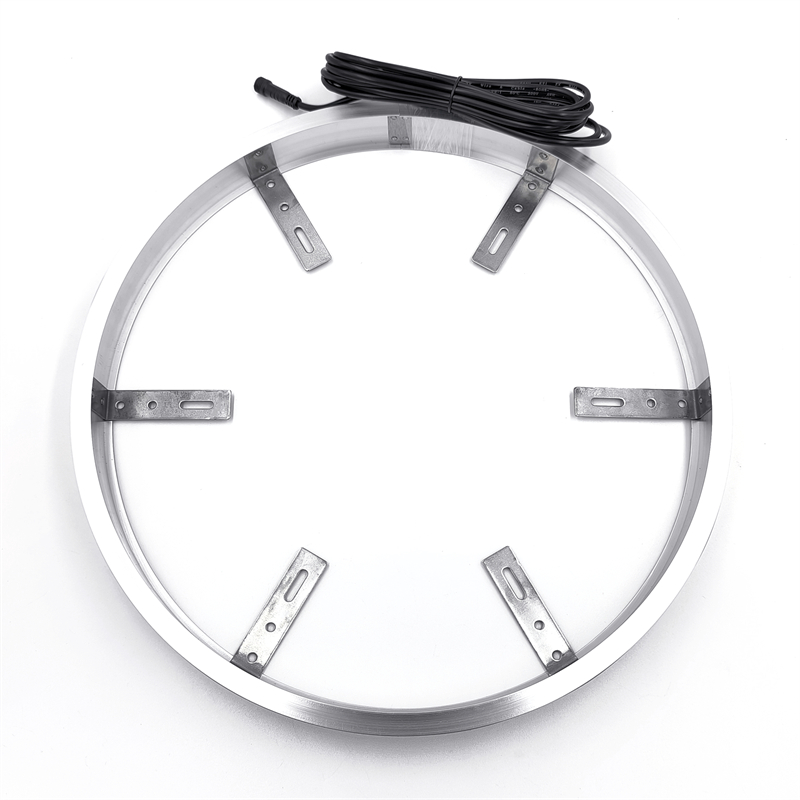
High-quality wheel lights adopt high-strength protective materials, and the shell is mostly impact-resistant polycarbonate (PC) or aluminum alloy, which has good weather resistance and impact resistance, and can withstand the centrifugal force generated by the high-speed rotation of the wheels and the impact of road bumps. For example, Xprite's off-road dedicated wheel lights adopt a lightweight aluminum alloy frame, which not only has strong protection but also improves heat dissipation performance.
Sealing design is the key to waterproof and dustproof. High-end wheel lights adopt multiple sealing processes, such as silicone sealing rings at the connection between the bulb and the shell, and waterproof connectors at the line interface, which can effectively prevent moisture and dust from entering the internal circuit and reduce the risk of failure. According to industry statistics, the failure rate of wheel well lights in 2024 decreased by 12% year-on-year, mainly due to the improvement of sealing design and materials.
3. Adaptability to Extreme Environments: High and Low Temperature Resistance and Corrosion Resistance
High-quality wheel lights need to have good high and low temperature adaptability, and can work normally in the temperature range of -40℃ to 85℃, adapting to the harsh cold in the north and the extreme heat in the south. At the same time, the surface will be treated with a special coating to enhance corrosion resistance and prevent oxidation and fading when exposed to the outside for a long time.
D. Compatibility: Installation Convenience and Vehicle Compatibility
Compatibility mainly includes two aspects: installation convenience and vehicle compatibility, which directly affect the user's installation experience and use effect. An excellent wheel light should have the characteristics of simple installation and wide compatibility to meet the needs of different users.
1. Installation Convenience: DIY Installation Without Professional Tools
Mainstream wheel lights adopt a modular design, and the installation process is simple, without the need for professional tools and modification experience. Car wheel lights are usually fixed on the brake rotor dust cover with screws, equipped with special installation hardware and lines, which users can install by themselves; bicycle wheel lights are mostly fixed on spokes or valve stems with straps or buckles, and the installation time only takes 5-10 minutes.
Magnetic levitation wheel lights are the most convenient type to install, which only need to replace the original wheel hub cap. The logo always remains positive, with excellent texture, and the lights automatically turn on when the wheels rotate, which is deeply loved by consumers.
2. Vehicle Compatibility: Choice Between Universal and Specialized Types
Wheel lights are divided into universal and specialized types. Universal types are compatible with a variety of vehicle models, and only need to be selected according to the wheel size. For example, car wheel lights suitable for 17-18 inch tires can be compatible with cars, SUVs, trucks and other vehicle models; specialized types are designed for specific vehicle models with higher fit. For example, the special wheel lights for Audi A4L can perfectly match the original blade wheel hubs, enhancing the three-dimensional sense and sporty style.
When purchasing, attention should be paid to the wheel size and brake system structure. For example, for vehicles with deep concave wheels and compact brake calipers, ultra-thin wheel lights should be selected to avoid interference with other components after installation. A certain model of Xprite's wheel light is only 0.9cm thick and 1.25cm wide, suitable for vehicles with deep concave wheels and compact brake calipers.
E. Control Method: Intelligent and Personalized Experience Upgrade
With the development of intelligent technology, the control methods of wheel lights have become increasingly rich, gradually upgrading from traditional manual switches to remote control, intelligent linkage, etc., improving the convenience of use and personalized experience.
1. Mainstream Control Methods
- Remote control: Control the switch, color switching, mode adjustment of the lights through a wireless remote control. The control distance is mostly 10-30 meters, which is suitable for adjusting the light effect after parking or operating without getting off the vehicle while driving.
- Mobile APP control: High-end intelligent wheel lights support mobile APP connection. Through the APP, you can customize the light color, brightness, flashing frequency, and even set the lights to synchronize with music to achieve personalized atmosphere creation. RGB color-changing wheel lights can generate almost any color of light through APP control, meeting the aesthetic needs of different users.
- Intelligent linkage control: Some high-end car wheel lights can be linked with the vehicle's circuit system to achieve functions such as steering auxiliary lighting and brake warning. For example, when turning, the wheel lights on the corresponding side automatically increase the brightness to improve the turning vision; when emergency braking, the lights flash quickly to warn the following vehicles.
2. Light Modes: Adaptation to Diversified Usage Scenarios
High-quality wheel lights provide a variety of light modes to meet the needs of different scenarios. For example, the constant light mode is suitable for daily driving warnings, the flashing mode is suitable for enhancing recognition in bad weather, and the gradient, rotation, and alternation modes are suitable for showing personalized styles. Loodika LED bicycle wheel lights provide four light modes: multi-color fast change, multi-color slow change, nine-color switching, and constant light. Users can freely choose according to their preferences and scenarios.
III. Wheel Light Performance Purchasing Points for Different Scenarios
Different usage scenarios have different performance requirements for wheel lights. The following provides specific purchasing suggestions for four common scenarios: daily car commuting, car off-roading, daily bicycle commuting, and bicycle off-roading.
A. Daily Car Commuting Scenario
Core needs: Balancing decoration and basic warning performance, easy installation, and adaptation to daily weather conditions.
Performance purchasing points:
1. Brightness: Choose 300-500 lumens, 6500K cool white light or RGB color-changing models to balance warning effect and personalized needs;
2. Protection level: IP67 is sufficient to meet the needs of daily car washing and rainy day driving;
3. Battery life/power supply: Priority is given to vehicle power supply or USB-charged models to avoid frequent battery replacement;
4. Control method: Remote control or mobile APP control for convenient adjustment of light modes.
B. Car Off-Road Scenario
Core needs: High-brightness warning, strong protection performance, and adaptation to extreme environments.
Performance purchasing points:
1. Brightness: Choose high-brightness models with more than 800 lumens and 6500K cool white light to ensure long-distance visibility;
2. Protection level: IP68 protection level to withstand sand impact and wading needs;
3. Material: Aluminum alloy shell to enhance impact resistance and heat dissipation performance;
4. Compatibility: Ultra-thin design to avoid interference with off-road tires and brake systems.
C. Daily Bicycle Commuting Scenario
Core needs: Lightweight, long battery life, easy installation, and basic warning performance.
Performance purchasing points:
1. Brightness: 50-100 lumens, soft light that does not dazzle to avoid interfering with others;
2. Battery life: USB-charged models with a battery life of ≥10 hours to meet daily commuting needs;
3. Protection level: Above IP65 to cope with rainy day commuting;
4. Control method: Vibration sensor switch for automatic start and stop to save power.
D. Bicycle Off-Road Scenario
Core needs: High brightness, strong protection, long battery life, and adaptation to complex road conditions.
Performance purchasing points:
1. Brightness: High-brightness models with more than 200 lumens to enhance the warning effect in complex road conditions;
2. Battery life: Large-capacity lithium battery with a battery life of ≥20 hours, supporting fast charging;
3. Protection level: Above IP67 to cope with sand and rain impact;
4. Installation: High-strength fixing method to avoid falling off in bumpy road sections.
IV. Common Misunderstandings and Pitfall Avoidance Guide for Wheel Light Performance
When purchasing and using wheel lights, many consumers fall into some performance misunderstandings, leading to poor user experience. The following summarizes common misunderstandings and pitfall avoidance suggestions:
A. Misunderstanding 1: The Brighter the Better
Excessively bright wheel lights will interfere with the vision of drivers of other vehicles, increase the risk of traffic accidents, and may even violate traffic regulations. When purchasing, you should choose the appropriate brightness according to the usage scenario. Avoid choosing high-brightness models with more than 1000 lumens on urban roads to ensure that the light does not interfere with others.
B. Misunderstanding 2: Ignoring Heat Dissipation Performance
LED bulbs generate heat during operation. If the heat dissipation is poor, long-term use will accelerate light decay and shorten the service life. When purchasing, attention should be paid to the heat dissipation design, such as aluminum alloy shell, hollow heat dissipation structure, etc., and cheap products with plastic shells and no heat dissipation design should be avoided.
C. Misunderstanding 3: Blindly Pursuing High Protection Levels
The higher the protection level, the higher the product price. In daily commuting scenarios, the IP67 protection level is sufficient. There is no need to blindly pursue IP68 to avoid unnecessary expenses. Only when frequently used in extreme scenarios such as off-roading and wading, high protection level models need to be selected.
D. Misunderstanding 4: Ignoring Compatibility
Failure to confirm the wheel size and brake system structure before purchase leads to interference with other components after installation and inability to use normally. When purchasing, you should carefully check the product compatibility range or provide the vehicle model to the merchant to select a specially adapted model.
V. Wheel Light Performance Development Trends: Intelligence, Greenization, and High-Endization
With the electrification and intelligent transformation of the automotive industry and the upgrading of consumer demand, the performance development of wheel lights presents three major trends:
1. Intelligent upgrading: Integrating the Internet of Things (IoT) functions to achieve remote control, intelligent linkage, OTA upgrades, etc. For example, steering auxiliary lighting linked with navigation systems and emergency warning functions combined with Vehicle-to-Everything (V2X) technology improve driving safety. The penetration rate of intelligent wheel lights is expected to reach 30% in 2024 and exceed 50% by 2027.
2. Greenization development: Adopting renewable materials and energy-saving technologies to reduce carbon emissions. For example, the optimization of solar charging technology and the improvement of LED bulb energy efficiency comply with global emission reduction goals. The carbon emissions in the manufacturing of wheel well lights in 2024 have decreased by 20% compared with 2020, and green supply chain management has become an industry trend.
3. High-endization advancement: Developing from a single lighting function to multi-functional integration, integrating various values such as decoration, safety, and interaction. For example, dynamic light and shadow effects, music synchronization, personalized customization and other functions meet consumers' needs for high-endization and personalization. According to McKinsey's 2023 automotive industry report, consumers' willingness to pay for personalized lighting functions has increased by 20%, driving wheel lights to develop in the direction of high added value.
VI. Conclusion: How to Choose a High-Performance Wheel Light?
When choosing wheel lights, you should comprehensively consider the core performance indicators combined with your own usage scenarios and needs: prioritize basic performance such as brightness (lumen value, color temperature), battery life, protection level, and compatibility, and then choose the control method and light mode according to personalized needs. Daily commuting scenarios focus on convenience and basic performance, while extreme environment use requires enhanced protection and brightness performance.
At the same time, you should choose regular brand products to ensure quality and after-sales guarantee. High-quality wheel lights can not only improve the user experience but also ensure driving/cycling safety, becoming practical and beautiful accessories for transportation. In the future, with technological innovation, wheel lights will continue to make breakthroughs in intelligence and greenization, bringing users a better performance experience.